
The coastline of East Anglia is beguiling in its unique light, its landscape, and in the towns along its shores. I return time and time again to where Essex, Suffolk and Norfolk meet the sea. Essex from its broad sweep of sky and sea off Harwich to the creeks which confuse the divide between Benfleet and Canvey Island. Suffolk, from the meeting of the rivers Orwell and Stour at the head of the Shotley Peninsular, to the steep shingle shore at Aldeburgh, and luxuriant sand at Kessingland and Pakefield. The huge skies of Norfolk encase a vast stretch of coast that can be seen from across The Wash in Lincolnshire, surely out as far as Cromer.

The light, reflected in the works of Gainsborough and Constable in the dark galleries in the Ipswich Museum. Despite Summer visitors, these coasts are quiet, and their rhythms are slower. Sometimes their beauty is only in a whisper.

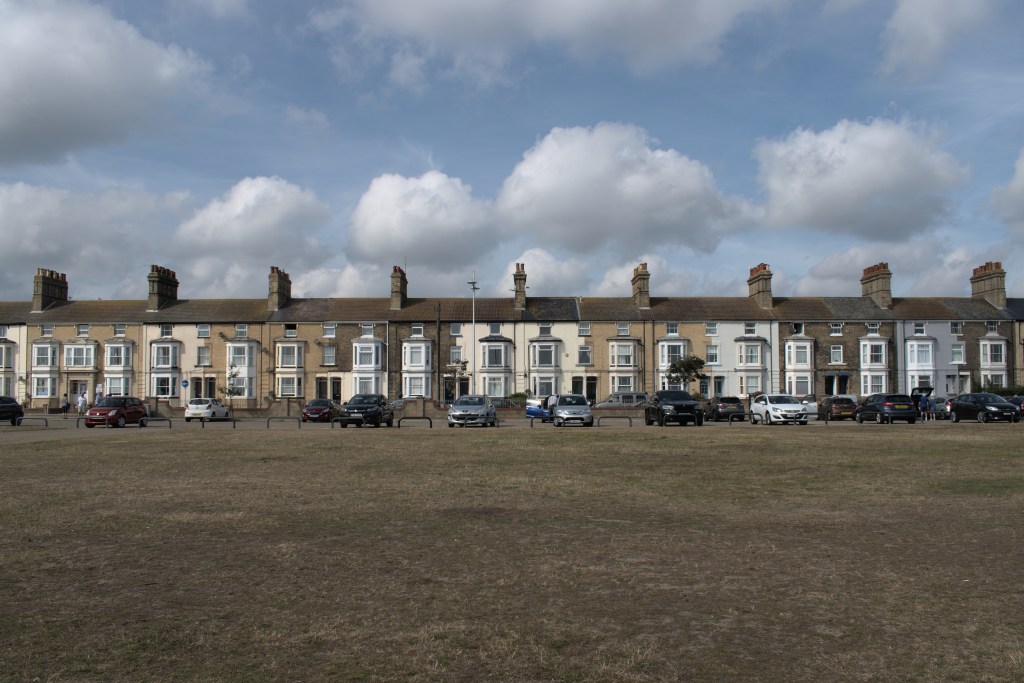
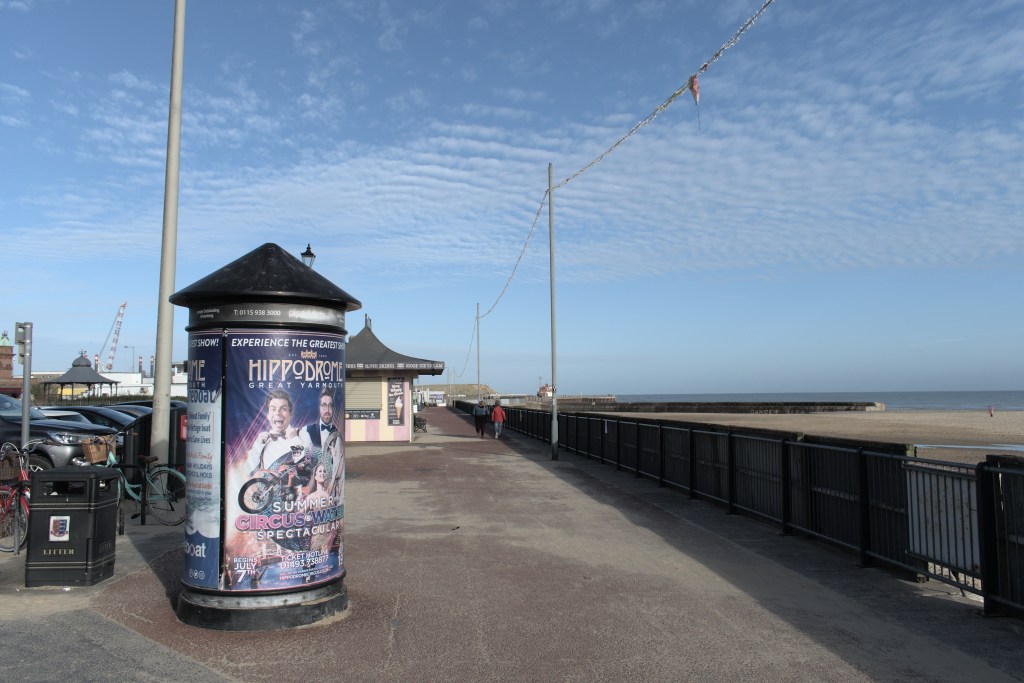
These coasts are not dramatic, where the sea and the land are romantically entangled as in the west. There are few coves, cliffs or rocky outcrops. Here are wide stretches of marshland below sea defences with footpaths, muffled sand dunes, and long spits of land like Orford Ness or South Denes. Flint and brick towns – some still with railways, and seaside resorts with Pleasure Beaches or holiday camps and caravan parks. Posters on the promenade in Gorleston always advertise Peter Jay and Jimmy Mac at the Hippodrome in Great Yarmouth.
We crossed into Essex at Manningtree, over the river Stour on the road from the Shotley Peninsular. I was keen to see Harwich again and find Grayson Perry’s artist house, if we were lucky. It turned out to be like a Hansel and Gretel house made of tiles and copper. The house stands on a gentle slope on a great sweep of the Stour with the Royal Hospital School in the distance. We found the few narrow Victorian streets in Harwich and the Low Lighthouse across the recreation ground from Harbour Crescent. Across a cold February tide lie vast container vessels, MSG, or China Shipping Line, and the cranes and gantries of the port of Felixstowe. John Constable’s wonderful picture, Harwich Lighthouse, looks south towards the lighthouse by an exposed muddy foreshore, along a shingle path and grassy bank which has hardly changed to this day. A great East Anglian sky occupies almost a third of the painting. The sea near the horizon is bright with a stretch of reflected afternoon sunshine. A diagonal cascade of clouds falls towards the northern horizon and forms a shadow on the far deep water. This is reflected in the line of a path where a boy carrying a sack pauses, and two figures sit in the grass between sunlight and shadow of a passing cloud. I too can see the single ships caught in the pale light. In Constable’s painting their masts are inclined by a wind that also troubles the shoreline. Their sails billow in the distance below canopy of clouds lit, as if in a celestial auditorium.
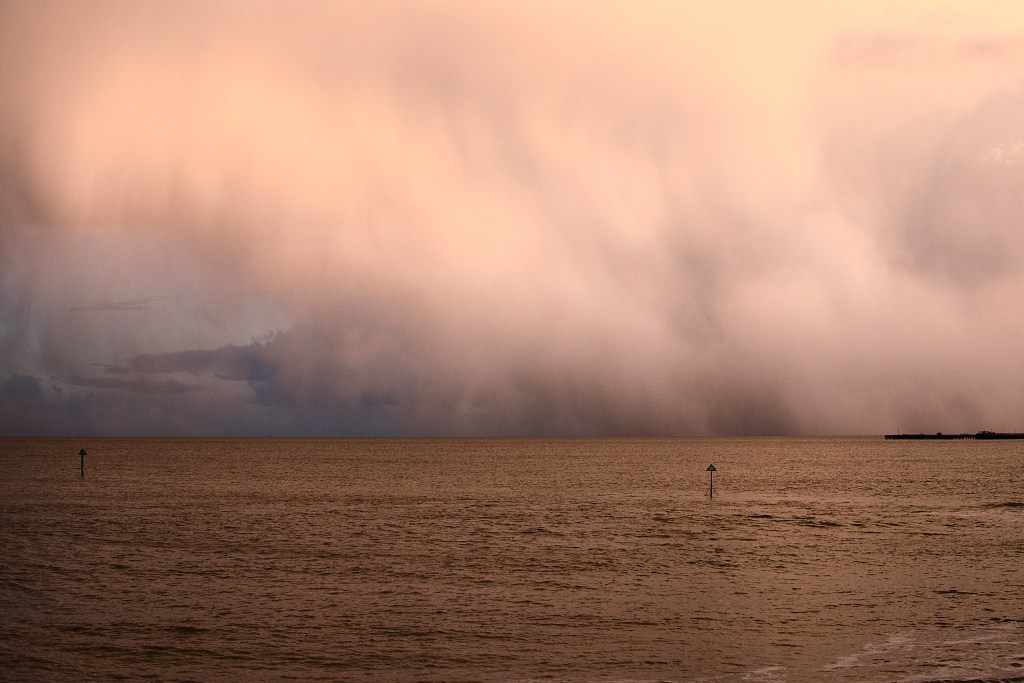
We left Harwich through Little Oakley and Great Oakley, and from the higher Walton Road we could see the grey North Sea beyond Kirby Creek, Horsey Island, and The Twizzle. The remains of a great storm in the buffeting wind and in the massing clouds. Walton Road became Kirby Road as it swept below Hamford Water Nature Reserve, and on to Walton on the Naze. Past a small funfair and suburban houses so close to the sea. I know its cold outside but in the warm pale glow of the setting sun over Frinton, I pull over to watch the storm clouds illuminated in pink. In the darkness thought Weeley and Hare Green and on to Colchester for Southend and a funeral tomorrow.
The road out of Southend was slow though Leigh on Sea and Hadleigh. Saturday morning traffic. The view of the Thames Estuary from the top of Vicarage Hill is spectacular in almost blinding day light. We made our way onto Canvey Island under the line to Fenchurch Street and over the Benfleet Creek. I have been to Canvey before. I remember seeing a mother and an adult son on the beach by the groins at low tide. Orthodox Jews. A sign of the new community from Stamford Hill in North London? Murals of the high sea wall commemorate the devastating flood of 1953. In places the sea wall was washed away. In Labworth Park there is a funfair, an American style diner, and a café named after a boxer.
 Andy Small
Leave a comment